Why Safety Standards Are Critical in Electrical Work
Apr 29, 2026
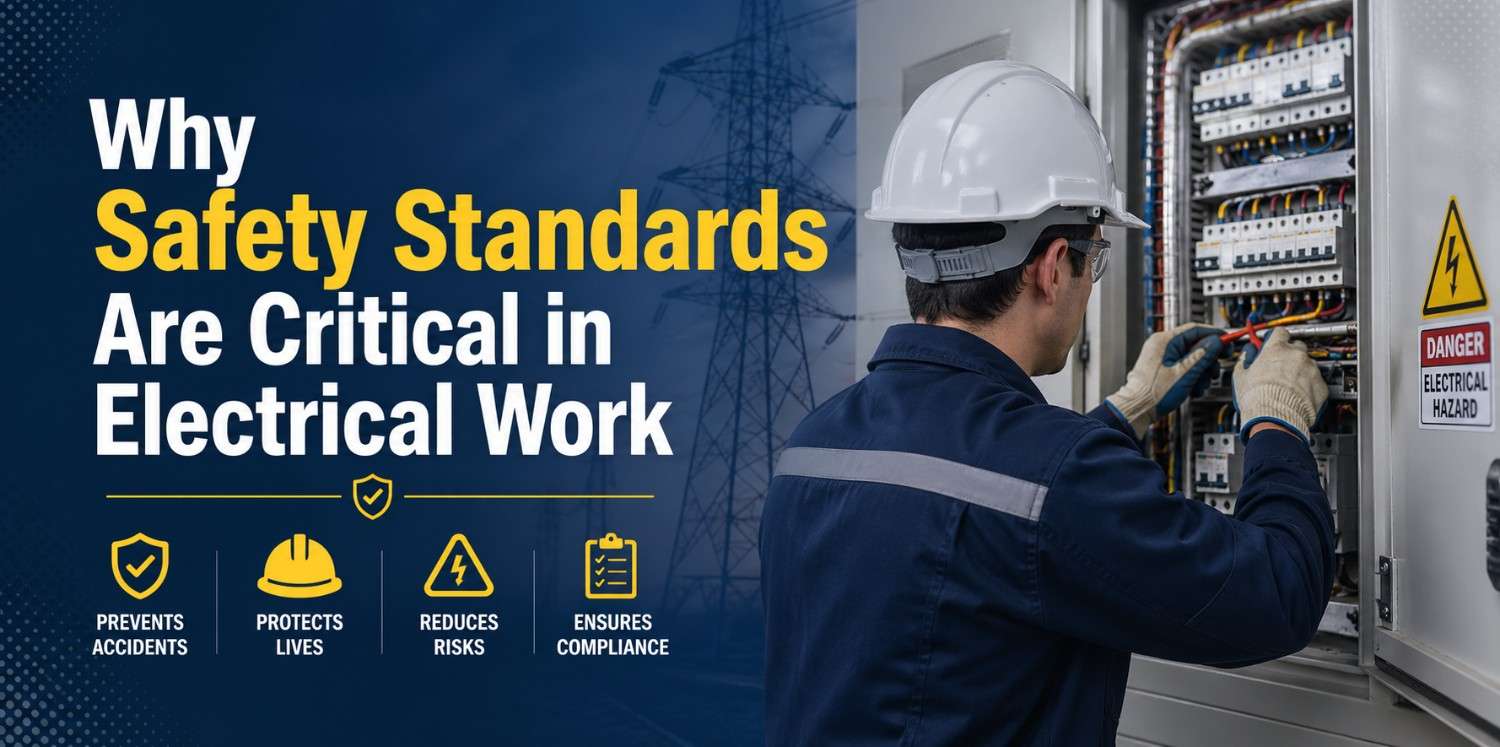
Electrical work supports everything you use each day. From lighting to equipment, every system depends on safe and proper installation. When safety standards are ignored, even a small issue can turn into a serious problem. You need to understand why these standards matter and how they protect your property, your work, and the people around you.
Electrical systems carry power through wiring, panels, and devices. Each part must follow a clear standard. When you follow these rules, you reduce risk and keep systems stable. When you ignore them, you increase the chance of faults, damage, and downtime.
1. Safety Standards Help Prevent Electrical Hazards
You face real risks when electrical systems are not installed or maintained the right way. Faulty wiring, loose connections, or overloaded circuits can lead to short circuits or overheating.
For example, if a wire is not rated for the correct load, it can heat up during use. Over time, this can damage insulation and create a fire risk. Safety standards guide how to choose the right materials and install them correctly.
When you follow these standards, you reduce the chances of sparks, system failure, or equipment damage. A trained electrician checks each part of the system to confirm it meets required conditions.
2. Proper Standards Keep Systems Running Smoothly
You rely on electrical systems to work without interruption. Poor installation or shortcuts can affect performance. Lights may flicker, equipment may shut down, or systems may fail without warning.
When you follow safety standards, you create a system that supports daily operations. Each circuit carries the correct load, and each connection stays secure.
For instance, balanced circuit distribution helps avoid overload in one area. This keeps power flow steady across the building. When systems run as planned, you avoid delays and reduce repair costs.
3. Safety Standards Support Code Compliance
Electrical work must meet local codes and inspection requirements. These codes exist to protect people and property. If your system does not meet these standards, it may fail inspection or require rework.
You should work with professionals who understand these requirements. They plan and install systems based on current codes. This ensures your project passes inspections without delays.
For example, proper grounding is a key part of electrical safety. It protects against shock and system faults. If grounding is not done correctly, the system may not pass inspection. Following standards from the start helps you avoid these issues.
4. Regular Maintenance Helps Maintain Safety
Installing a system correctly is only one part of the process. You also need to maintain it over time. Wear and tear can affect wiring, panels, and connections.
You should schedule routine checks to keep your system in working condition. During an inspection, an electrician looks for signs of damage or stress. This includes loose wires, worn insulation, or overloaded circuits.
For example, a connection inside a panel may loosen over time. If not fixed, it can cause heat buildup. A simple inspection can catch this early and prevent further problems.
Regular maintenance helps you keep your system safe and avoid unexpected failures.
5. Safety Standards Protect Equipment and Investment
Electrical systems power your equipment. If the system fails, your equipment may also suffer damage. This can lead to repair costs and downtime.
When you follow safety standards, you protect both the system and the devices connected to it. Proper voltage levels, correct wiring, and stable connections help equipment run without issues.
For example, voltage fluctuations can damage sensitive equipment. A properly installed system helps control these changes and supports stable operation.
You invest in your building and equipment. Following safety standards helps protect that investment over time.
6. Skilled Professionals Make a Difference
Electrical work requires skill and attention to detail. Safety standards provide the foundation, but proper execution matters just as much.
You should work with trained professionals who understand how systems function in real conditions. They review your setup, plan the work, and complete each step with care.
For example, during a system upgrade, a professional checks load requirements before replacing panels. This ensures the new system can handle demand. Without this step, the upgrade may not solve the issue.
When you rely on experienced professionals, you get a system that meets safety standards and performs as expected.
7. Planning with Safety in Mind Reduces Future Issues
You should include safety standards during the planning stage, not after installation. Early planning helps you avoid changes later.
Start by defining your power needs and system layout. Consider future expansion and equipment use. This helps you design a system that supports both current and future needs.
For example, leaving space in panels for additional circuits allows you to expand without major changes. This reduces cost and keeps your system organized.
Planning with safety in mind helps you create a system that lasts longer and performs better.
8. Clear Documentation Supports Safe Operations
You should keep records of your electrical system, including plans, upgrades, and maintenance work. This helps you track changes and manage future work.
When you have clear documentation, electricians can review past work and understand your system. This reduces errors during repairs or upgrades.
For example, knowing the layout of circuits and panels helps speed up troubleshooting. It also ensures that new work matches existing systems.
Keeping records supports safe and organized electrical management.
Electrical safety standards are not optional. They guide how systems are designed, installed, and maintained. When you follow them, you protect your property, your equipment, and your daily operations.
You rely on electrical systems every day. By focusing on safety, planning carefully, and working with skilled professionals, you create systems that perform as required and support long-term use.


